
Microsoft Confirms Defender Bug Triggering False Antivirus Disabled Alerts on Windows

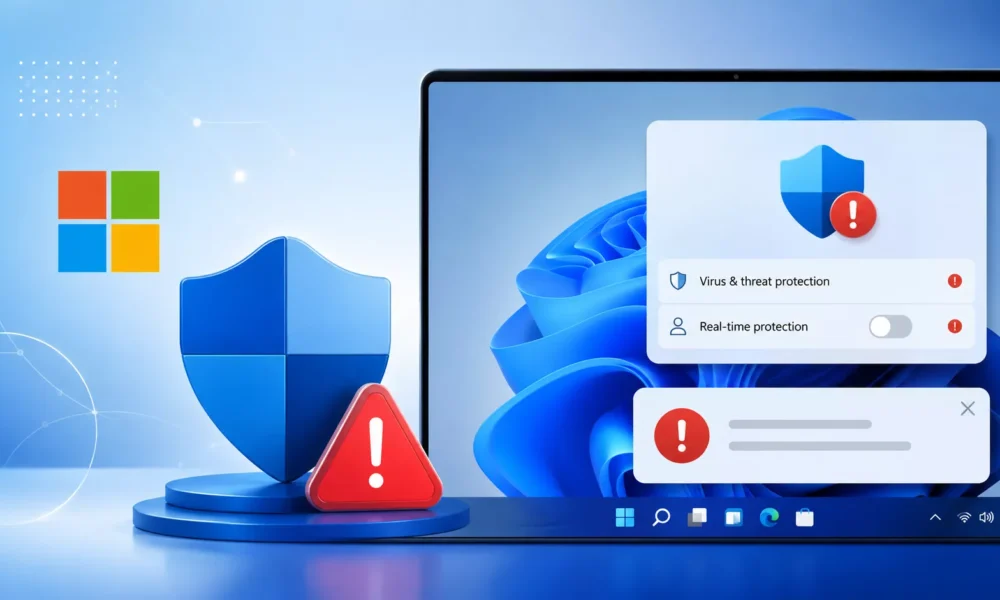
Microsoft has confirmed a Microsoft Defender Antivirus issue that can generate false Windows notifications claiming, “Microsoft Defender Antivirus is turned off,” even when the endpoint protection service remains enabled and fully operational.
The notification issue can emerge after systems install recent Microsoft Defender Antivirus updates, potentially alarming users and administrators who find that Defender’s security settings are healthy, real-time protection is active, and endpoint controls continue to function normally.
Microsoft emphasized that the warning does not signal a service outage, an inactive configuration, or a loss of antivirus coverage.
Microsoft Confirms Defender Bug
According to Microsoft’s Windows health documentation, the misleading notifications may appear when affected systems start and may reappear intermittently after users sign in.
The behavior can persist even after notification settings are disabled, creating an additional operational burden for enterprise help desks, endpoint management teams, and security operations centers.
Microsoft has classified the issue as confirmed and said it is developing a correction that will be distributed in a future Microsoft Defender Antivirus update. However, the company’s August 28 health notice does not provide an expected release date, affected Defender engine or platform versions, a specific update identifier, or a temporary mitigation.
The issue is not limited to one Windows version or desktop environment. Microsoft’s advisory lists a broad set of supported client and server operating systems affected by the false “turned off” alert following Defender updates.
Affected client systems include Windows 11 versions 26H1, 25H2, 24H2, and 23H2; Windows 10 versions 22H2 and 21H2; Windows 10 Enterprise LTSC 2019; and Windows 10 Enterprise LTSC 2016.
Affected server platforms include Windows Server 2025, Windows Server 2022, Windows Server 2019, Windows Server 2016, Windows Server 2012 R2, and Windows Server 2012.
The scope makes this primarily an enterprise management and user-experience problem rather than a Windows release-specific defect. Organizations that operate mixed desktop and server estates may see an increase in support tickets from users who interpret the message as evidence that endpoint protection has failed.
For security operations teams, the important distinction is that the issue affects the Windows notification layer rather than Defender’s core protection capabilities. Microsoft stated that Defender continues to operate normally and that its settings still indicate active antivirus protection.
Administrators should verify Defender’s actual status through established endpoint management dashboards, security monitoring tools, Microsoft Defender portal telemetry, and local security controls before escalating a desktop notification into a security incident. A notification alone should not be treated as evidence that an endpoint has become unprotected.
The recurring message may nevertheless complicate incident-response workflows that depend on user-submitted screenshots, desktop alerts, or employee reports as early warnings of disabled security controls. It may also reduce user confidence in legitimate endpoint security notifications if similar alerts are repeatedly dismissed as false positives.
Microsoft has not linked the bug to malware activity, unauthorized Defender configuration changes, exploitation, or any compromise of protected devices. The company has also not recommended disabling Microsoft Defender Antivirus, rolling back Defender updates, or applying a workaround while it prepares a permanent fix.
Mitigation
Organizations should add the advisory to internal service-desk and SOC guidance to help analysts distinguish this known notification defect from a genuine Defender outage or tampering event.
Teams should continue investigating reports that include corroborating evidence, such as disabled real-time protection, stopped services, policy changes, missing security telemetry, or endpoint management alerts.
Microsoft first published the issue on August 28 at 3:34 PM Pacific Time, and last updated the notice at 4:02 PM Pacific Time. Until the company releases a corrected Defender update, enterprises should treat the warning as a confirmed false notification—not proof that Microsoft Defender Antivirus has been disabled.



No Comment! Be the first one.