
Zscaler Client Connector Critical RCE Flaw CVE-2026-59568 Threatens Windows Endpoints

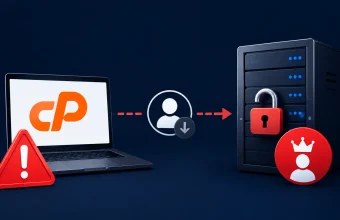
A critical vulnerability in Zscaler Client Connector could allow an unauthenticated remote attacker to execute arbitrary code on affected Windows endpoints without requiring valid credentials or user interaction.
Tracked as CVE-2026-59568, the vulnerability has been assigned a CVSS v3.1 score of 9.1, placing it in the Critical severity category.
The flaw presents a significant risk for enterprises that rely on Zscaler Client Connector as part of their secure access and endpoint connectivity infrastructure.
Zscaler Client Connector Critical RCE Flaw
According to the vulnerability assessment, CVE-2026-59568 is remotely exploitable over a network and requires no privileges or interaction from the targeted user.
Its CVSS vector, AV:N/AC:L/PR:N/UI:N/S:U/C:H/I:H/A:N, indicates that exploitation can be launched remotely with low attack complexity and without authentication.
A successful compromise could have a high impact on the confidentiality and integrity of information processed by an affected endpoint, although the vulnerability is not currently rated as having a direct availability impact.
Zscaler’s 2026 Client Connector release documentation indicates that CVE-2026-59568 covers multiple remote code execution vulnerabilities affecting the application rather than representing a single isolated coding defect.
The absence of publicly documented exploitation details or reliable proof-of-concept information currently limits defenders’ ability to create precise network-based detection signatures.
However, the high severity and unauthenticated attack requirements make rapid remediation particularly important for organizations with large fleets of managed Windows devices.
Zscaler addressed the remote code execution vulnerabilities in Client Connector releases published on June 1, 2026. For Windows environments, version 4.8.0.232 is identified as addressing the issues associated with CVE-2026-59568.
Organizations may also encounter later Windows builds documented by Zscaler, including versions 4.9.0.455, 4.8.0.291, 4.9.0.448, 4.8.0.284, and 4.7.0.364.
Administrators should compare installed versions against the vendor’s current remediation guidance and ensure that vulnerable systems are upgraded to an appropriate fixed release.
The disclosure is particularly important because Zscaler Client Connector can serve as a core component in Zscaler Internet Access and Zscaler Private Access deployments.
The endpoint agent can facilitate secure traffic forwarding, tunneling, inspection, access controls, and device-posture enforcement.
Compromise of such a security-sensitive component could therefore provide an attacker with a valuable foothold on an enterprise-managed Windows device.
Depending on the privileges and surrounding security controls, arbitrary code execution could potentially be followed by credential theft, reconnaissance, security-control tampering, persistence, lateral movement, or collection of sensitive information.
The same 2026 release cycle also includes fixes for several other security issues. These include CVE-2026-59564, an authentication bypass vulnerability;
CVE-2026-59567, which covers multiple local privilege escalation vulnerabilities; and CVE-2026-59565, a local and kernel-level denial-of-service vulnerability.
The presence of multiple security issues in the same endpoint security component reinforces the need for organizations to maintain disciplined patch-management processes for security agents rather than treating them as ordinary desktop applications.
Security teams should immediately inventory Windows endpoints running Zscaler Client Connector and verify their installed versions.
Beyond patching, defenders should examine endpoint telemetry for suspicious child processes associated with Zscaler components, unexpected services, anomalous outbound connections, unexplained service modifications, and unsuccessful or unusual software-update activity.
Organizations should also verify that endpoint management platforms have successfully distributed the required updates and that no devices remain outside normal patching policies.
CVE-2026-59568 demonstrates the security implications of vulnerabilities in endpoint connectivity and security software.
Because these agents operate close to critical network and security controls, a remotely exploitable unauthenticated code-execution flaw can create an especially serious enterprise exposure.
Rapid inventory, version verification, vendor-recommended remediation, and targeted endpoint monitoring should therefore be prioritized to reduce the potential attack surface associated with the vulnerability.

No Comment! Be the first one.